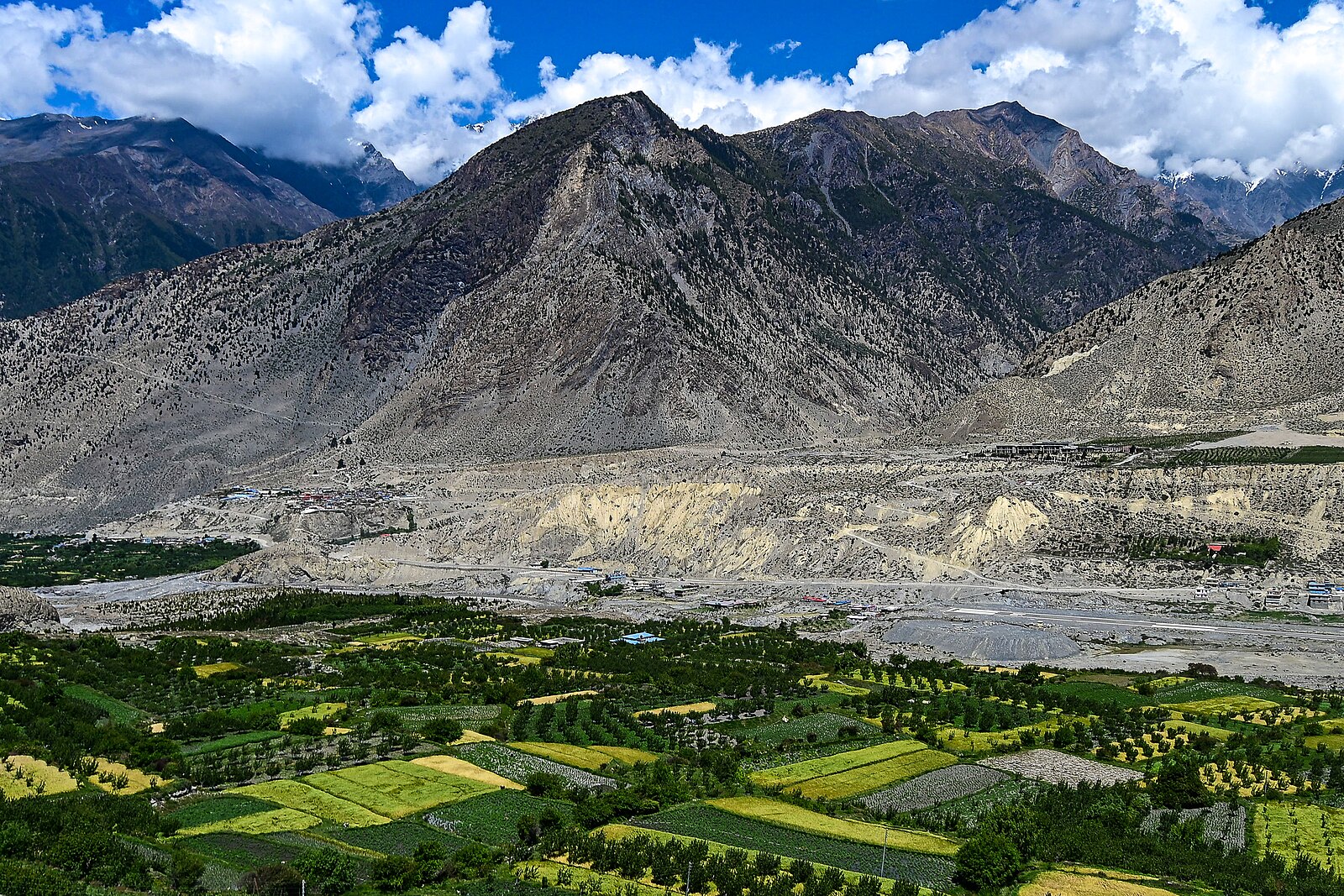
Upper Mustang does not look like the rest of Nepal. It sits in the rain shadow north of the Annapurna and Dhaulagiri massifs, which means the monsoon never reaches it, and the landscape is arid, eroded and coloured in ochre, grey and deep red.
Closed to foreigners until 1992, the former Kingdom of Lo preserved its Tibetan Buddhist culture almost intact. Walking here feels much more like Tibet than Nepal.
What Makes Mustang Unique
- The walled city of Lo Manthang, capital of the old kingdom
- Sky caves cut into cliff faces, some thousands of years old
- Ancient monasteries with remarkable original murals
- A desert landscape unlike anywhere else in Nepal
- Trekkable during monsoon, when most of Nepal is unwalkable
That last point matters commercially. Mustang is one of very few Nepali regions worth trekking in July and August.
The Route
Twelve to fourteen days is typical, usually starting from Jomsom.
- Fly Pokhara to Jomsom (2,720m), or drive in via Beni
- Kagbeni (2,800m) — the checkpoint where Upper Mustang begins
- Chele, Syangboche and Ghami — high desert villages and passes
- Charang (3,560m) — a substantial monastery and old fortress
- Lo Manthang (3,840m) — the walled capital, worth two nights
- Side trips to Chhoser cave monasteries and Namgyal Gompa
- Return via Drakmar and Ghiling, or by jeep
Two nights in Lo Manthang is the single best decision you can make on this route. The cave complexes at Chhoser alone justify the extra day.
Permits: The Expensive Part
Upper Mustang is a restricted area with a permit cost that surprises people.
- Restricted Area Permit — around USD 500 per person for ten days
- Roughly USD 50 per person for each additional day
- ACAP (Annapurna Conservation Area) permit on top
- A minimum of two trekkers and a licensed guide are mandatory
Solo trekking is not permitted. Permits must be issued through a registered agency.
Costs
Because of the permit, Mustang is among Nepal’s more expensive treks.
- Guided packages typically USD 1,800 to USD 2,800 per person
- The restricted permit alone accounts for a large share
- Jomsom flights are short but weather-dependent
- Teahouses are comfortable and improving each year
Best Time to Go
- May to October — the widest window, including monsoon months
- June to August — genuinely good here, unlike the rest of Nepal
- March to April — clear but with strong afternoon winds
- Winter — bitterly cold, and many locals migrate south
Afternoon wind through the Kali Gandaki is a fixture. Most trekking days start early and finish by early afternoon for exactly that reason.
Difficulty
Mustang is more about distance and dryness than altitude.
- Five to seven hours of walking daily
- Repeated climbs over passes between 3,500m and 4,200m
- A maximum sleeping altitude of 3,840m, which is manageable
- The dry air and strong sun demand serious hydration
Ready to Walk into the Old Kingdom?
Upper Mustang is a genuine cultural expedition — one of the last places where Tibetan Buddhist life continues much as it has for centuries.
At Global Rising Tours & Travel, we arrange the restricted-area permits, guides and group logistics that Mustang requires. See our trekking packages or contact us to plan a departure.