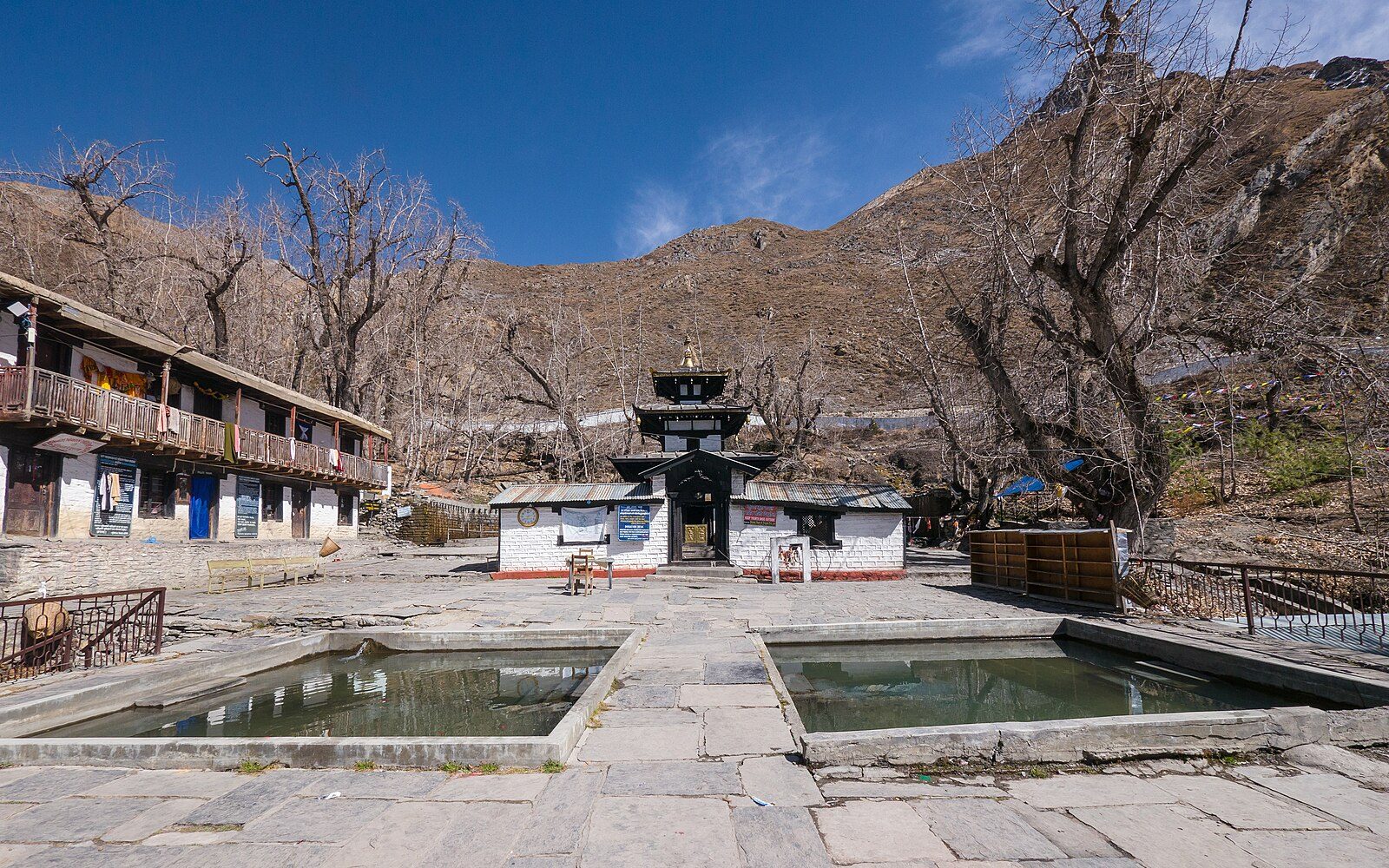
Muktinath sits at 3,800m in the Mustang district, and it is among the very few religious sites held sacred by both Hindus and Buddhists. Hindus know it as Mukti Kshetra, the place of liberation. Buddhists call it Chumig Gyatsa, meaning “hundred waters”.
Pilgrims have walked here for centuries. Today most arrive by jeep, but the significance is undiminished.
What Makes It Sacred
- One of the 108 Divya Desams, the holy abodes of Vishnu
- One of the eight most sacred Hindu shrines, the Svayam Vyakta Kshetras
- A major Buddhist site associated with Guru Rinpoche
- Home to a naturally burning flame fed by underground natural gas
- The presence of Shaligram fossils in the Kali Gandaki, revered as forms of Vishnu
The eternal flame burning beside a spring is the detail that makes Muktinath unusual. Fire and water together are what give the site its particular significance.
The 108 Water Spouts
Behind the main temple, 108 bull-headed spouts pour glacial water in a semicircle.
- Pilgrims bathe under all 108 in sequence
- The water comes straight off the mountains and is extremely cold
- Two sacred pools sit in front of the spouts
- The ritual is believed to wash away accumulated sin
Most foreign visitors watch rather than participate, which is entirely acceptable. If you do take part, do so quietly and follow what others are doing.
Getting There
Access has improved dramatically over the past decade.
- Fly Pokhara to Jomsom (2,720m), about 20 minutes, then 45 minutes by jeep
- Drive from Pokhara via Beni and Tatopani, a long but scenic day
- Trek in on the Annapurna Circuit, descending from Thorong La
- Helicopter charters operate from Pokhara for pilgrims short on time
The Jomsom flight is spectacular, threading between Annapurna and Dhaulagiri, but it is weather-dependent and usually operates only in the morning.
Best Time to Visit
- March to June — the main pilgrimage season, pleasant and clear
- September to November — excellent weather and stable flights
- December to February — very cold, and snow can close the road
- Monsoon — Mustang lies in the rain shadow, so it stays trekkable
Mustang’s rain shadow position makes it one of the few Nepali destinations genuinely worth visiting during monsoon.
Altitude Awareness
At 3,800m, Muktinath is high enough to matter, particularly if you fly in.
- Flying from Pokhara (820m) to Jomsom is a rapid altitude gain
- Spend a night in Jomsom or Kagbeni before going up if possible
- Walk slowly at the temple complex itself
- Watch for headache, nausea and shortness of breath
- Descending to Jomsom resolves most symptoms
Practical Tips
- Remove shoes before entering the main temple
- Dress modestly, covering shoulders and knees
- Mornings are calmest; tour groups arrive from mid-morning
- Bring warm layers, as wind through the valley is persistent and cold
- Photography is generally allowed outside but ask before shooting inside
Nearby Kagbeni
Kagbeni, 30 minutes below, is well worth a stop.
- A medieval village of mud-brick alleys and a red gompa
- The gateway checkpoint to Upper Mustang
- A good place to acclimatise before visiting the temple
Ready to Visit Muktinath?
Whether you come as a pilgrim or a traveller, Muktinath is one of Nepal’s most atmospheric places — a temple in a high desert with the Annapurnas at your back.
At Global Rising Tours & Travel, we arrange Muktinath pilgrimage tours by road, flight and helicopter. See our tour packages or contact us to plan your visit.