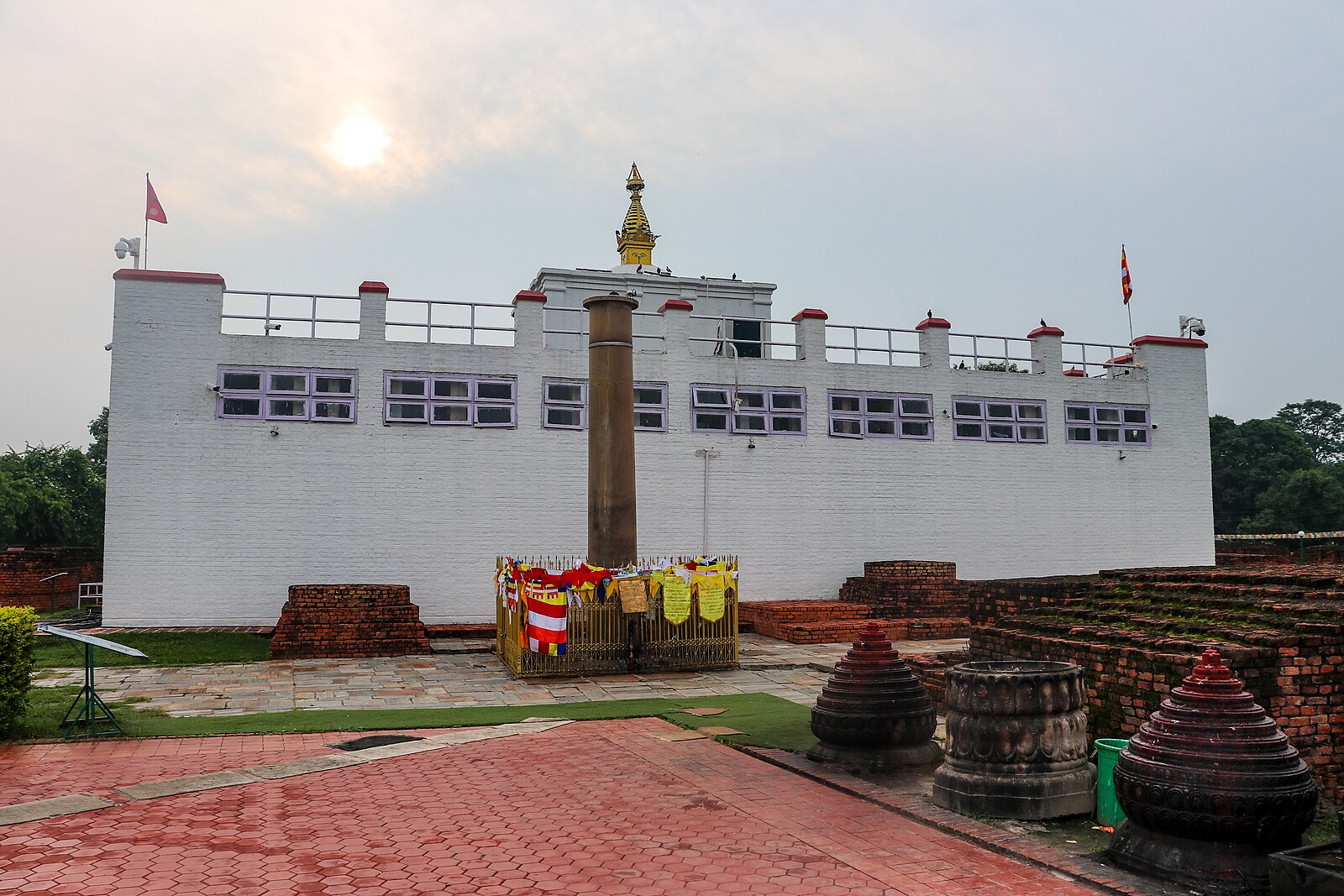
Lumbini is where Siddhartha Gautama, later the Buddha, was born in the sixth century BCE. It is one of the four principal pilgrimage sites of Buddhism, alongside Bodh Gaya, Sarnath and Kushinagar, and it has been a UNESCO World Heritage Site since 1997.
It sits in Nepal’s southern Terai plains, and it is a very different experience from the mountains — flat, warm and unusually quiet.
The Sacred Garden
The historical core is compact and can be seen in a few hours.
- Maya Devi Temple — built over the exact traditional birth site
- The marker stone, identifying the precise spot of the birth
- The Ashoka Pillar, erected by Emperor Ashoka in 249 BCE
- The Puskarini, the sacred pond where Maya Devi is said to have bathed
- Ancient brick foundations of stupas and viharas across the grounds
The Ashoka Pillar is the key piece of evidence. Its inscription records Ashoka’s visit and names the site as the Buddha’s birthplace, making it one of the earliest surviving confirmations.
The Monastic Zone
This is what makes Lumbini distinctive. Buddhist nations from around the world have each built a monastery here, in their own architectural tradition.
- Myanmar Golden Temple, one of the earliest and most striking
- Thai Monastery, in gleaming white marble
- Chinese, Korean, Vietnamese and Japanese monasteries
- German, French and Austrian foundations in the western zone
- The World Peace Pagoda at the northern end
The zone is spread over several kilometres. Renting a bicycle or hiring a rickshaw is by far the best way to see it.
How Long You Need
- One full day — the Sacred Garden and a selection of monasteries
- Two days — a relaxed pace with time for meditation sessions
- Half a day — enough for the Maya Devi Temple only, but rushed
Many visitors stop for a single night between Chitwan and the Indian border.
Getting There
- Fly Kathmandu to Bhairahawa (Gautam Buddha International Airport), about 35 minutes, then 30 minutes by road
- Overland from Kathmandu takes eight to ten hours
- Roughly four to five hours from Chitwan by road
- Close to the Sunauli border crossing with India
Best Time to Visit
- October to March — comfortable temperatures and clear conditions
- December to January — cool, with occasional morning fog
- April to June — very hot, regularly above 40C
- July to September — monsoon humidity and heavy rain
Lumbini gets genuinely hot. Winter is by far the most pleasant time.
Visiting Respectfully
- Remove your shoes before entering the Maya Devi Temple
- Photography is restricted inside the temple itself
- Dress modestly, covering shoulders and knees
- Keep your voice low in the Sacred Garden
- Walk clockwise around stupas and shrines
Where to Stay
- Simple guesthouses in Lumbini Bazaar
- Mid-range hotels near the eastern gate
- Some monasteries offer basic accommodation to pilgrims
- Better hotel options in Bhairahawa, 22km away
Ready to Visit the Buddha’s Birthplace?
Lumbini rewards an unhurried visit. The Sacred Garden in the early morning, before the day heats up, is one of the most peaceful places in Nepal.
At Global Rising Tours & Travel, we arrange Lumbini pilgrimage tours, often combined with Chitwan or Pokhara. Explore our tour packages or contact us to plan your itinerary.