Nepali food sits at a crossroads. It borrows spice from India, dumplings and noodles from Tibet, and adds a distinct Newari tradition found nowhere else. The result is more varied than most visitors expect, and considerably better than the “rice and lentils” reputation suggests.
Here is what to look for, and how to eat well wherever you are in the country.
Dal Bhat: The National Meal
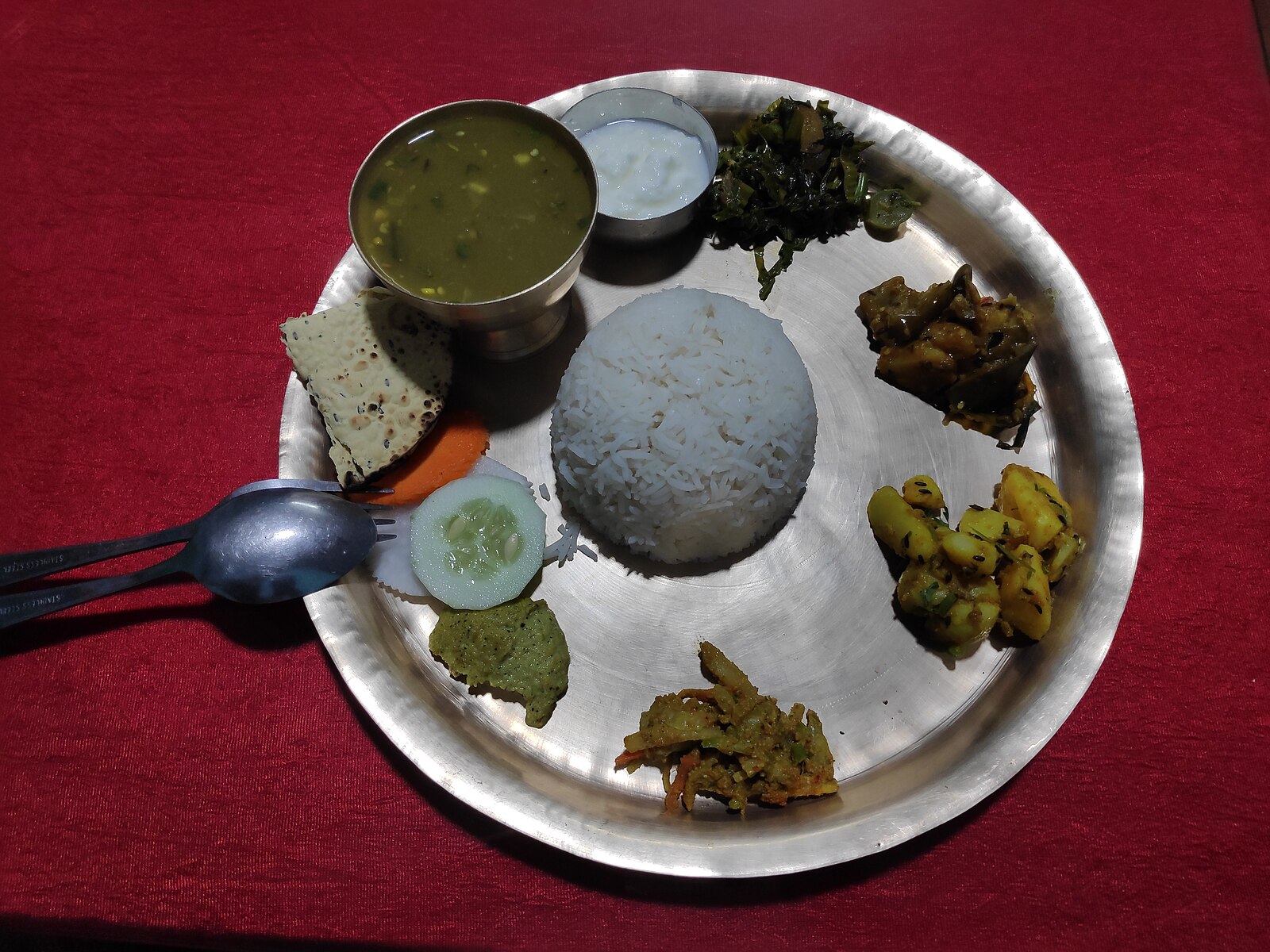
Dal bhat is eaten twice daily by most Nepalis, and once you understand it you will see why.
- Bhat — steamed rice, the base of the plate
- Dal — a lentil soup poured over the rice
- Tarkari — a seasonal vegetable curry
- Achar — pickle, often tomato, radish or fermented greens
- Saag — sautéed leafy greens
- Sometimes curd, papad or a meat curry
The key thing to understand: refills are free. “Dal bhat power, 24 hour” is a trekking joke, but the calorie logic behind it is real. On trail days it is genuinely the best value and best fuel available.
Momo
Nepal’s beloved dumpling, and the single most popular snack in the country.
- Steamed is standard; fried (kothey) and chilli momo are common variants
- Fillings include buff (water buffalo), chicken, pork and vegetable
- Served with achar, a tomato-sesame dipping sauce
- Jhol momo comes in a soupy broth and is excellent in cold weather
Momo in Kathmandu is generally far better than momo on the trekking trail. Save your enthusiasm for the city.
Newari Cuisine
The Kathmandu Valley’s indigenous Newar community has the most sophisticated food tradition in Nepal, and it is worth seeking out deliberately.
- Bara — a savoury lentil pancake, often with egg
- Chatamari — a thin rice-flour crepe, sometimes called Newari pizza
- Choila — spiced grilled buffalo, usually served cold and fiery
- Yomari — a steamed dumpling with molasses and sesame, eaten in winter
- Samay baji — a ceremonial platter combining beaten rice, choila, egg and more
- Juju dhau — Bhaktapur’s famous sweet “king curd”
Ask for a Newari restaurant in Patan or Bhaktapur rather than eating only in tourist areas. It is a different cuisine entirely.
Food on the Trekking Trail
Teahouse menus are remarkably similar throughout Nepal’s trekking regions.
- Dal bhat, almost always the freshest and most generous option
- Fried rice, chow mein, noodle soup and pasta
- Tibetan bread, chapati and porridge for breakfast
- Garlic soup, widely believed to help with altitude
- Apple pie in the Khumbu, an unlikely local speciality
Prices rise with altitude because everything is carried up by porter or yak. That is not a tourist markup — it reflects genuine transport cost.
Drinks
- Chiya — milk tea with spices, drunk constantly
- Tongba — hot fermented millet beer, a speciality of the eastern hills
- Raksi — a strong distilled spirit, usually homemade
- Lassi — yoghurt drink, best in the Terai
- Local beers, widely available and inexpensive
Eating Safely
A few habits prevent most travellers’ stomach problems.
- Drink treated, filtered or boiled water; avoid ice in cheaper places
- Eat where turnover is high and food is freshly cooked
- Be cautious with meat on the trail, particularly at higher altitudes
- Peel fruit yourself
- Vegetarian dal bhat is the safest reliable meal anywhere in Nepal
Meat is carried unrefrigerated to many trekking villages. Many experienced trekkers go vegetarian above Namche for exactly that reason.
For Vegetarians and Vegans
Nepal is one of the easiest countries in Asia for vegetarians.
- Dal bhat is naturally vegetarian and available everywhere
- Vegetable momo are on every menu
- Ghee and curd are common, so vegans should ask specifically
- Buddhist areas often have strong vegetarian traditions
Ready to Eat Your Way Through Nepal?
Food is a genuine highlight of travelling in Nepal, particularly once you step outside the tourist menus and into Newari kitchens.
At Global Rising Tours & Travel, our guides know where locals actually eat in each town we visit. Explore our tour packages and taste the country properly.