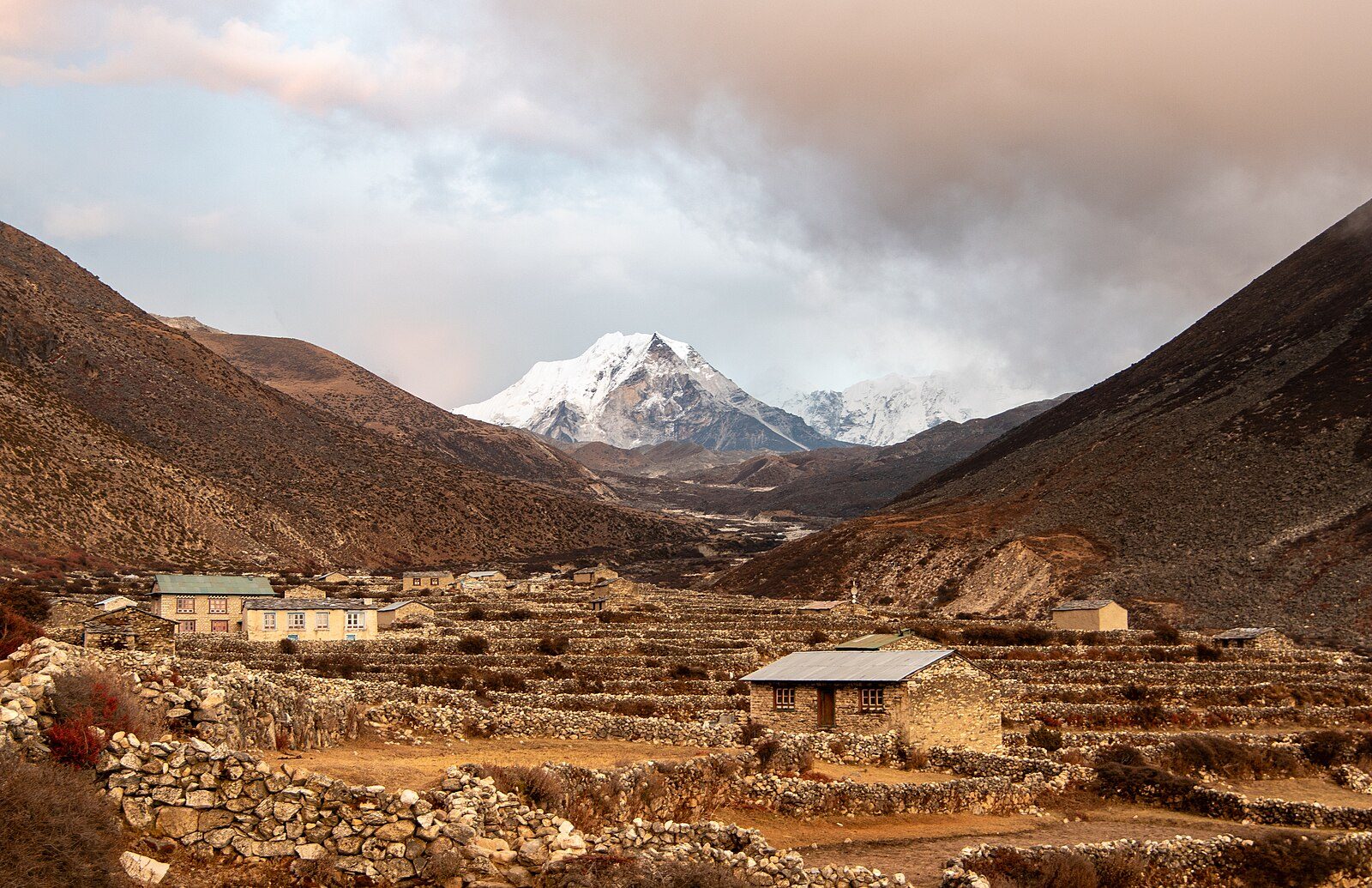
Island Peak, known locally as Imja Tse, is the mountain most people climb first in Nepal. At 6,189m it is a genuine Himalayan summit involving crampons, a rope and a fixed-line headwall — but it does not require years of alpine experience to attempt.
It sits in the Chhukung valley in the Everest region, which means most itineraries combine it with the Everest Base Camp trek.
What the Climb Involves
This is a mountaineering objective, not a walk, and it should be treated that way.
- A pre-dawn start, usually around 1am to 2am from high camp or Chhukung
- A rocky gully and ridge to reach the glacier
- Roped glacier travel with crampons across crevassed ground
- A steep headwall of roughly 100 to 150m climbed on fixed lines using a jumar
- A narrow summit ridge with substantial exposure
Most summit days run twelve to sixteen hours round trip.
Skills You Need
You do not need to arrive as an experienced mountaineer, but you do need to arrive fit and willing to learn.
- Confident use of crampons on uneven ice
- Ascending a fixed rope with a jumar
- Abseiling on descent
- Comfort with exposure on a narrow ridge
Reputable operators run a training day at Chhukung or base camp covering exactly these skills. Take it seriously — it is the difference between a good summit day and a frightening one.
The Itinerary
Typically eighteen to twenty days from Kathmandu.
- Lukla to Namche Bazaar with acclimatisation
- Tengboche, Dingboche and optionally Everest Base Camp
- Chhukung (4,730m) — the staging village
- Island Peak Base Camp (5,087m)
- Optional high camp at 5,600m
- Summit day and descent to Chhukung
- Return trek to Lukla
Combining with Everest Base Camp first is the sensible approach — it gives excellent acclimatisation before the climb.
Permits and Costs
- NMA climbing permit for Island Peak, which varies by season
- Sagarmatha National Park and local municipality permits
- Guided packages typically USD 2,200 to USD 3,500 per person
- Includes a climbing guide, group equipment and fixed ropes
Personal technical gear can usually be hired in Kathmandu or Chhukung, but boots should ideally be your own and well fitted.
Best Seasons
- April to May — the main climbing season, warmer and more settled
- October to November — excellent, colder, generally very clear
- Winter — extremely cold with high winds on the ridge
- Monsoon — not viable
Honest Advice
- Fitness matters, but acclimatisation matters more
- Do not attempt this as your first time above 4,000m
- The headwall is short but strenuous at altitude
- Summit success is never guaranteed, and weather closes days regularly
- Insurance must cover mountaineering above 6,000m, which standard travel policies exclude
Ready to Stand on a Himalayan Summit?
Island Peak is the most realistic step from trekking into genuine mountaineering, and the Khumbu is the best place in the world to make it.
At Global Rising Tours & Travel, we run Island Peak expeditions with IFMGA-trained and NMA-certified climbing guides. Explore our climbing and trekking packages or contact us to discuss your experience.