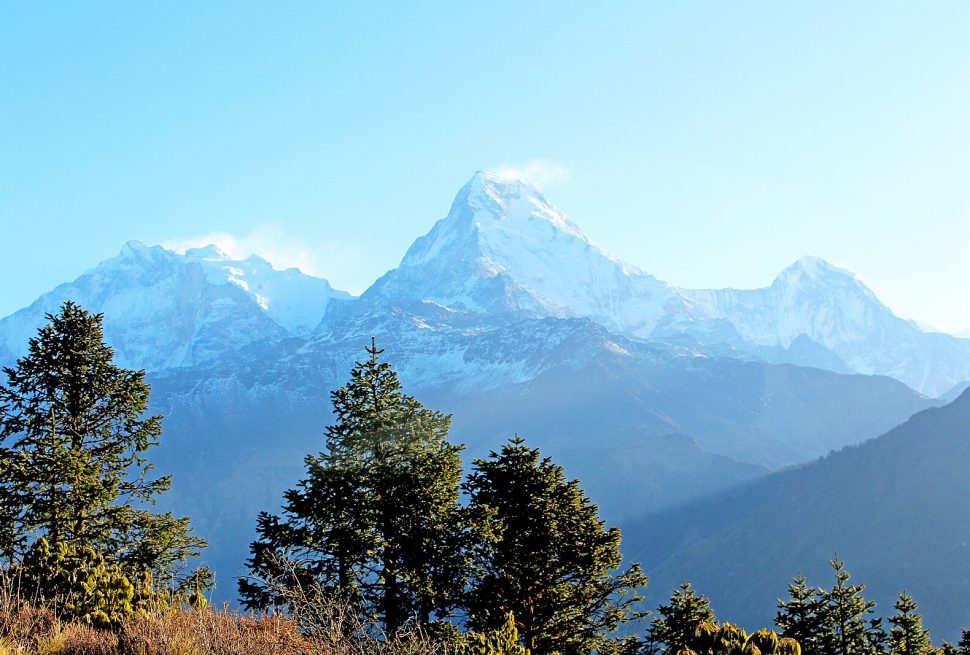
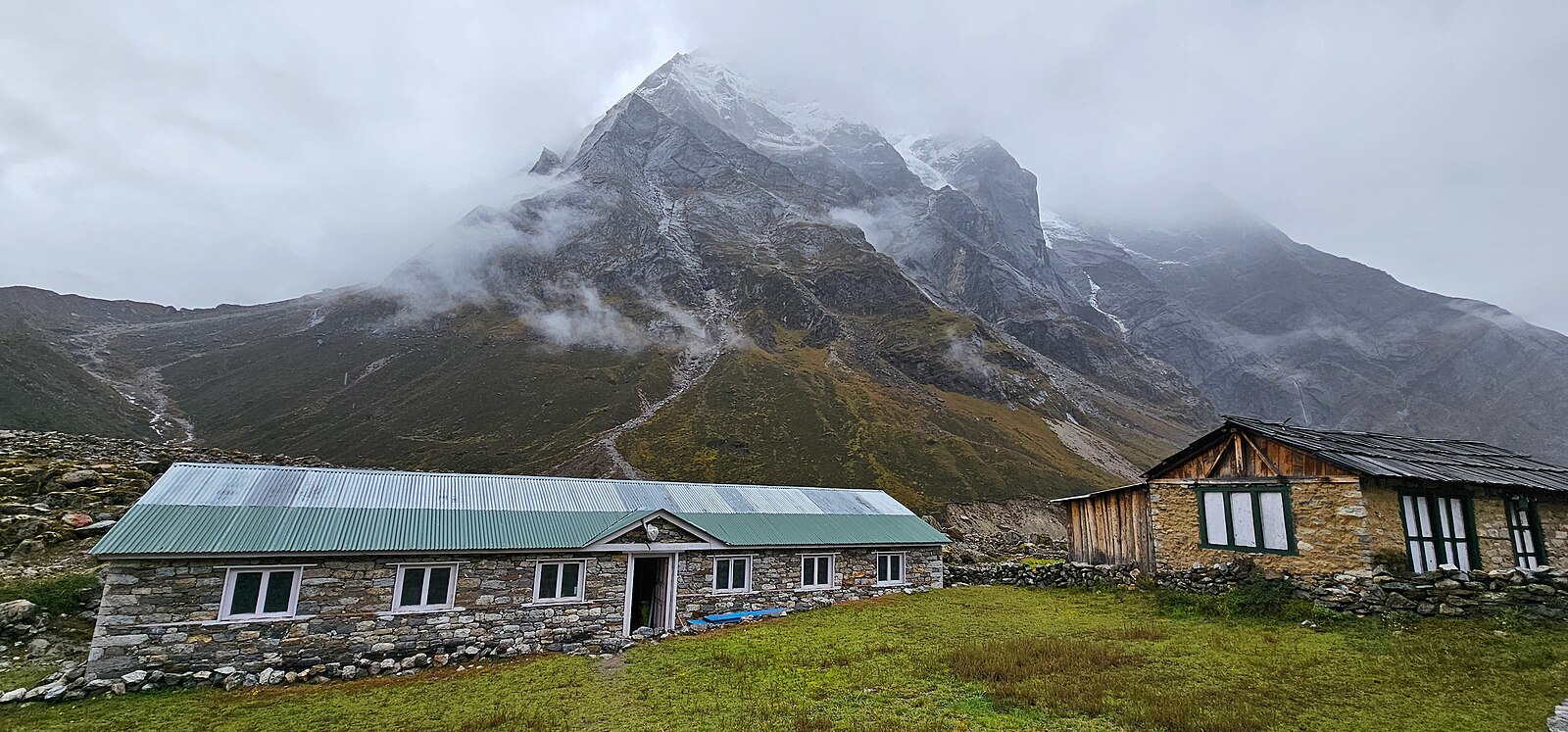
Mera Peak is the highest of Nepal’s designated trekking peaks at 6,476m, and it offers what is arguably the finest summit panorama available to non-expedition climbers. From the top you can see five 8,000m mountains: Everest, Lhotse, Makalu, Cho Oyu and Kanchenjunga.
Technically it is gentler than Island Peak. What makes Mera hard is the altitude itself.
Technically Easier, Physically Harder
This distinction catches people out, so it is worth being clear about.
- The climbing is mostly a long snow slope at a moderate angle
- A short steeper section near the summit is fixed-roped
- There is no headwall comparable to Island Peak’s
- But you are 287m higher, and the summit day is long and cold
Many climbers find Mera the tougher of the two precisely because of that altitude.
The Route
Eighteen to twenty-one days from Kathmandu.
- Fly to Lukla, then head south-east over the Zatrwa La (4,610m)
- Kothe (3,600m) and Thangnak (4,350m) in the Hinku valley
- Khare (5,045m) — the staging village and training base
- Mera High Camp (5,800m)
- Summit day to 6,476m and descent to Khare
- Return via the Hinku valley to Lukla
The Hinku valley approach is quiet and beautiful, and it sees far fewer people than the main Khumbu trail.
Skills Required
- Basic crampon technique on snow
- Walking roped on a glacier
- Using a jumar on the short fixed section
- The ability to keep moving steadily for ten to fourteen hours
A training day at Khare covers the technical basics. Prior mountaineering experience helps but is not mandatory.
Permits and Costs
- NMA climbing permit for Mera Peak, seasonally priced
- Makalu Barun National Park permit
- Local municipality permit
- Guided packages typically USD 2,300 to USD 3,600 per person
Best Seasons
- April to May — the primary season
- October to November — clear and cold, with excellent visibility
- Winter — very high winds on the summit plateau
- Monsoon — impractical
Preparing Properly
Mera rewards endurance training more than strength training.
- Long days on hills carrying a loaded pack
- Back-to-back training days rather than single hard sessions
- Prior experience above 5,000m is strongly recommended
- Cold tolerance matters — summit morning is often well below minus 15C
High camp at 5,800m is a genuinely difficult place to sleep. Expect a poor night and plan your summit day accordingly.
Insurance
- Standard travel insurance will not cover 6,476m
- You need a policy explicitly covering mountaineering to that altitude
- Helicopter evacuation cover is essential in the Hinku valley
Ready for Nepal’s Highest Trekking Peak?
Mera asks for patience and endurance rather than technical brilliance, and it repays both with one of the great views in the Himalaya.
At Global Rising Tours & Travel, we run Mera Peak expeditions with certified climbing guides, full group equipment and sensible acclimatisation. See our climbing packages or get in touch to plan your ascent.