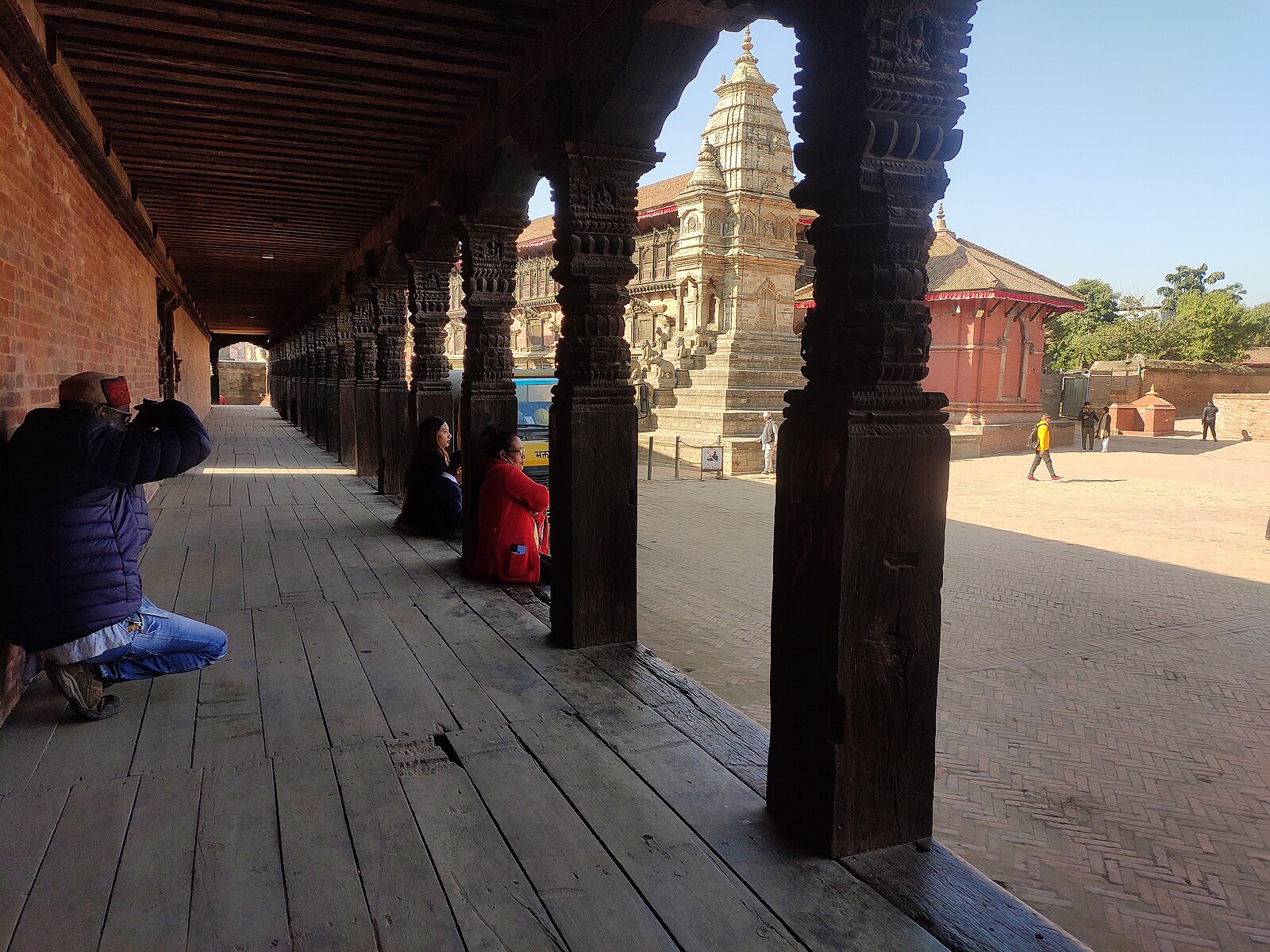
Of the Kathmandu Valley’s three former royal cities, Bhaktapur is the one that still feels like a living medieval town rather than a monument. Cars are largely kept out of the core, potters still work in the open squares, and the brick lanes have changed remarkably little.
If you only have time for one heritage city in the valley, this is the one we recommend.
What to See
Bhaktapur’s monuments cluster across four connected squares.
- The 55-Window Palace, the former royal residence in carved wood and brick
- The Golden Gate, widely considered the finest piece of gilt copper work in Nepal
- Nyatapola Temple, a five-storey pagoda completed in 1702 and the tallest in the country
- Bhairavnath Temple, facing Nyatapola across Taumadhi Square
- Dattatreya Square and the celebrated Peacock Window
- Pottery Square, where potters still throw and dry clay in the open
Nyatapola survived the 1934 and 2015 earthquakes largely intact, which says a great deal about how well it was built.
Entry Fee
Bhaktapur charges a foreign visitor entry fee, notably higher than the valley’s other sites.
- Roughly USD 15 to 18 per foreign visitor
- Substantially discounted for SAARC nationals
- The ticket is valid for the day, and can usually be extended for multi-day stays if you ask at the ticket office
- Keep your ticket, as it is checked at several gates
The fee funds restoration work, which after 2015 has been extensive and visibly effective.
How Long to Spend
- Half a day — the main squares at a brisk pace
- A full day — comfortable, with time for the backstreets and workshops
- An overnight stay — highly recommended, and still underrated
Staying the night is the real recommendation. Once the day-trip buses leave around 4pm, the town becomes extraordinarily quiet, and early morning in Durbar Square is something few visitors experience.
Getting There
- About 13km east of Kathmandu, roughly 45 to 60 minutes by taxi depending on traffic
- Local buses run from Ratna Park and Bagbazar
- Easily combined with Changu Narayan temple or Nagarkot
Many travellers pair Bhaktapur with an overnight in Nagarkot for the sunrise.
What to Eat
- Juju dhau, the celebrated Bhaktapur “king curd”, served in clay bowls
- Bara, a savoury lentil pancake, best from a local Newari kitchen
- Chatamari, sometimes called Newari pizza
- Yomari, particularly around the winter festival season
Juju dhau is genuinely worth seeking out. It is thicker and sweeter than ordinary yoghurt and is made only here.
Practical Tips
- Wear shoes you can slip off easily for temple entrances
- Mornings before 10am and evenings after 4pm are quietest
- Photography is fine outdoors, but ask before shooting inside shrines
- The brick paving is uneven, so sensible footwear helps
- Craft shops here sell genuine local woodwork, but compare prices first
Ready to Walk Through Medieval Nepal?
Bhaktapur is not a reconstruction or a museum. It is a working town that happens to be seven centuries old, and that is exactly what makes it worth your time.
At Global Rising Tours & Travel, we run guided Kathmandu Valley heritage tours including Bhaktapur, with guides who can actually explain what you are looking at. See our tour packages or contact us to arrange a private day tour.