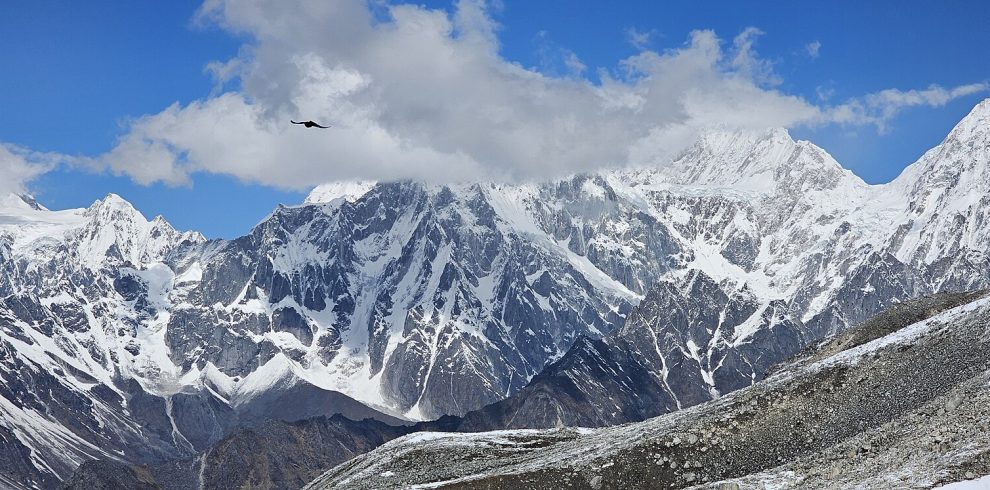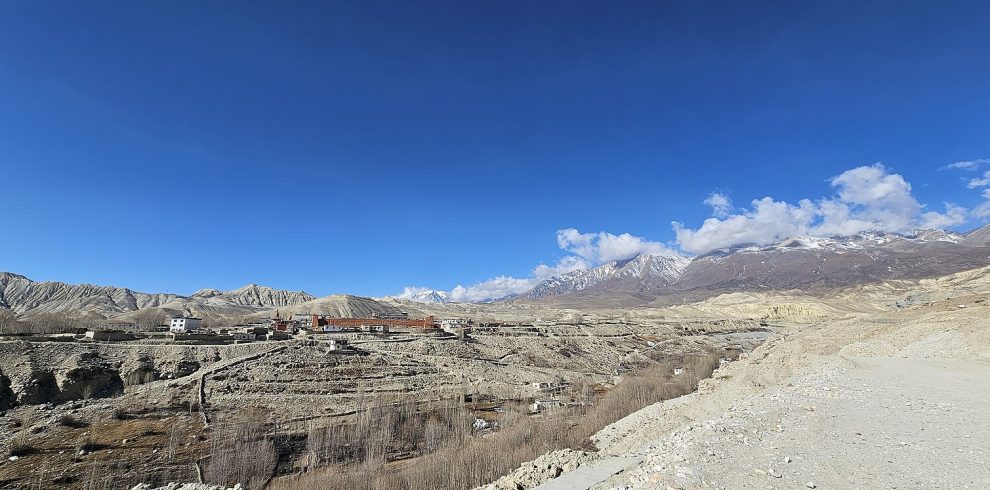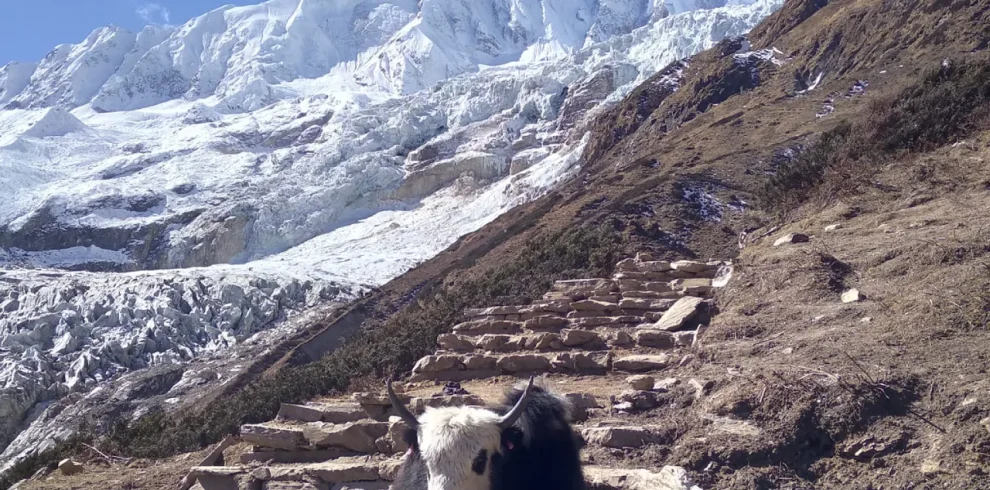
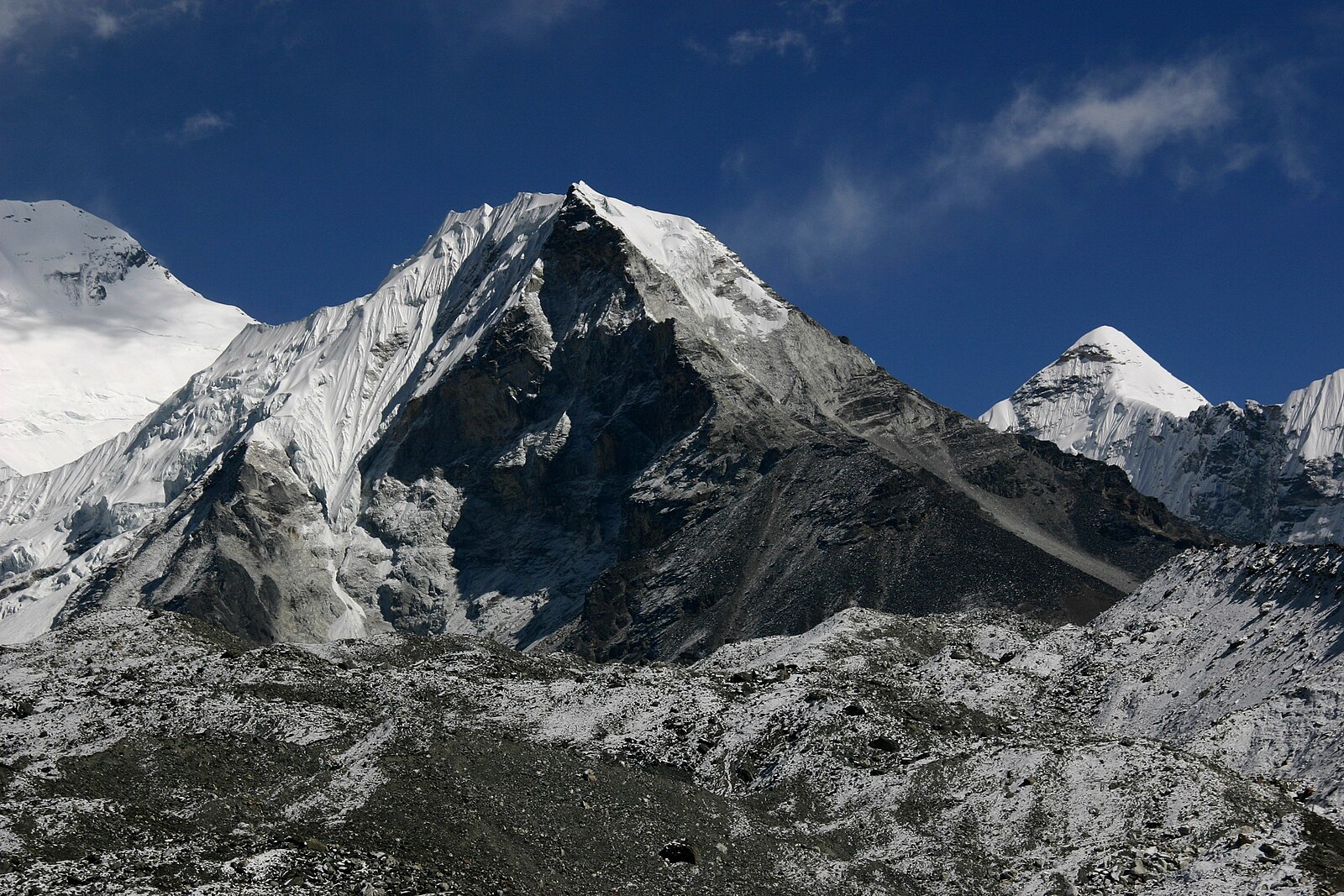
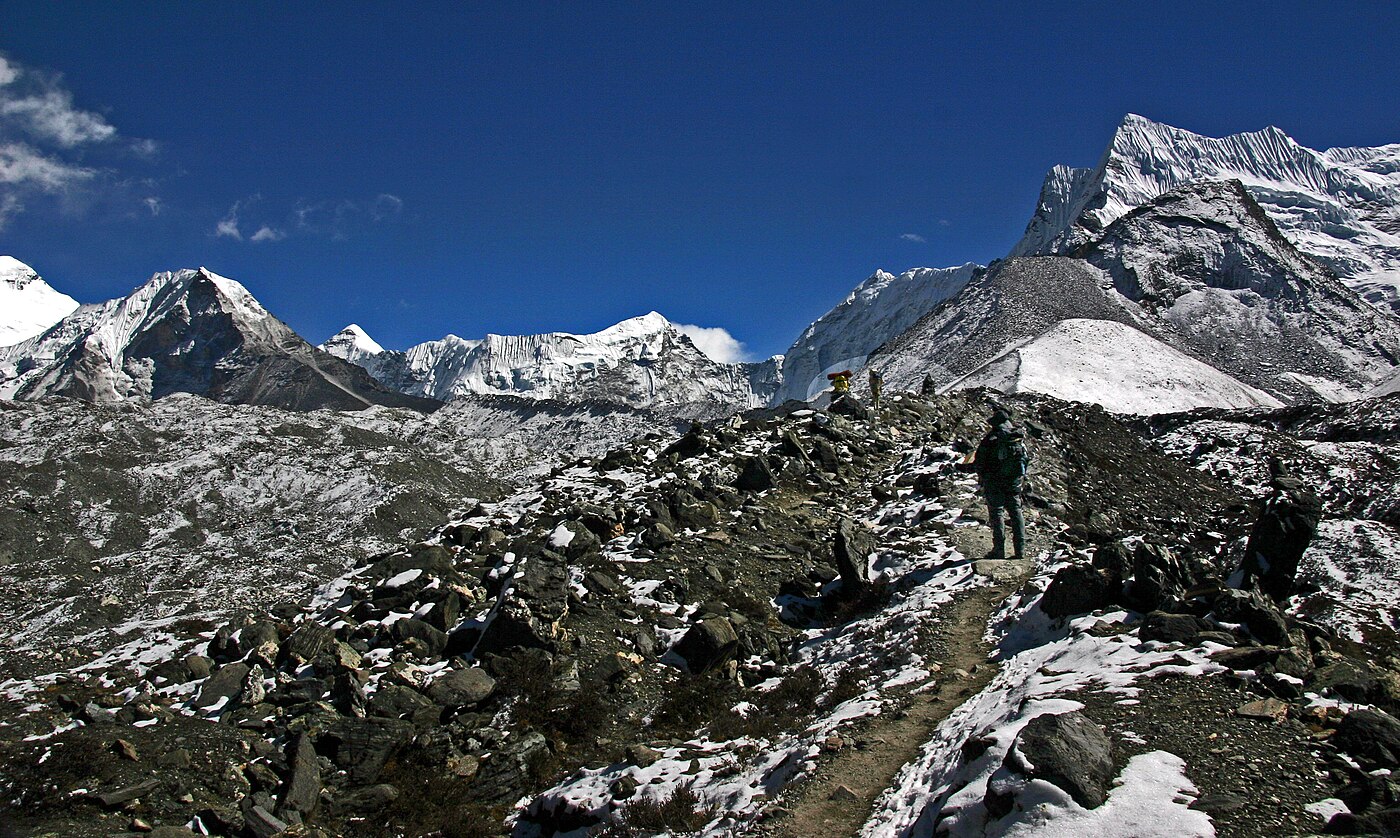
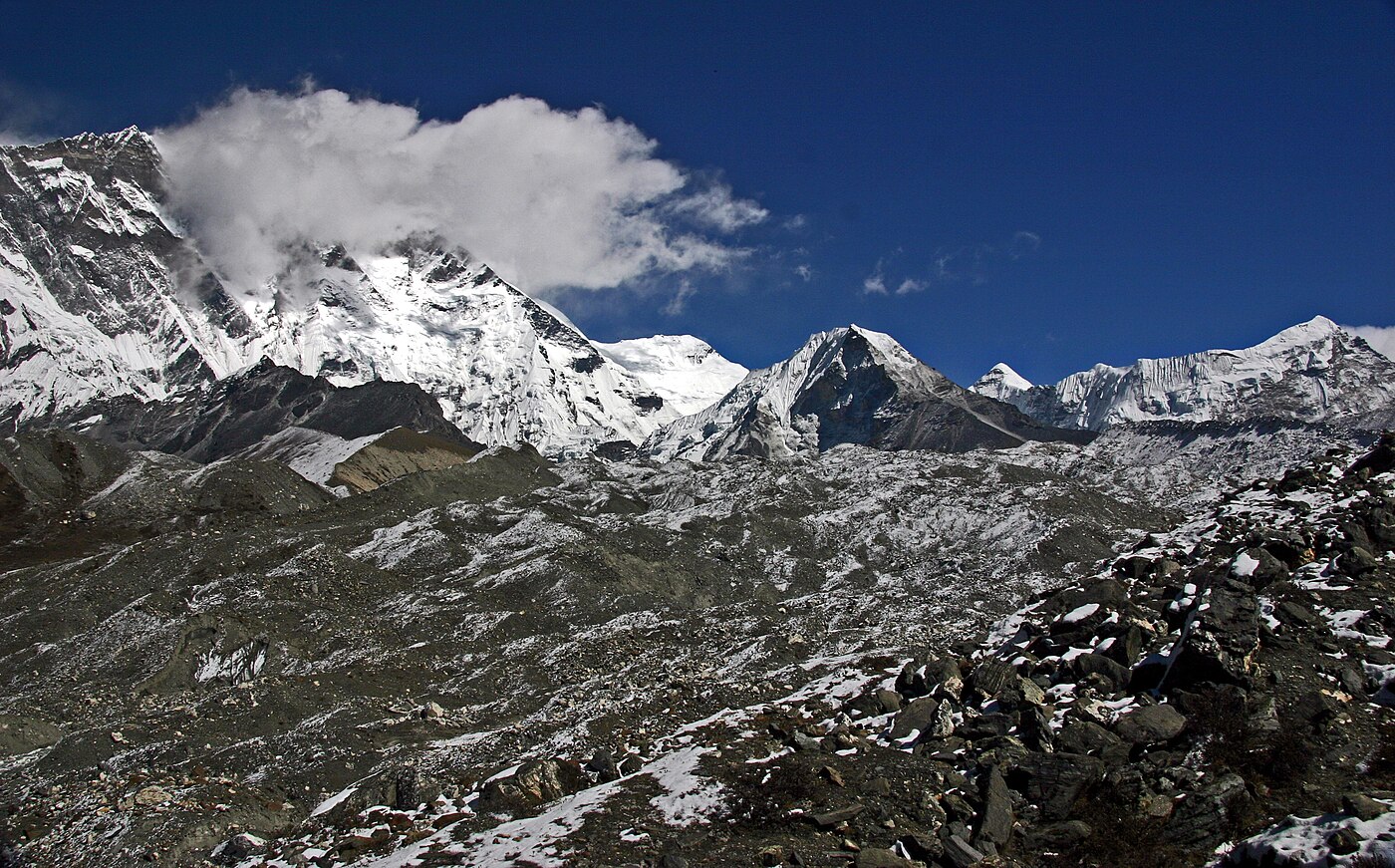
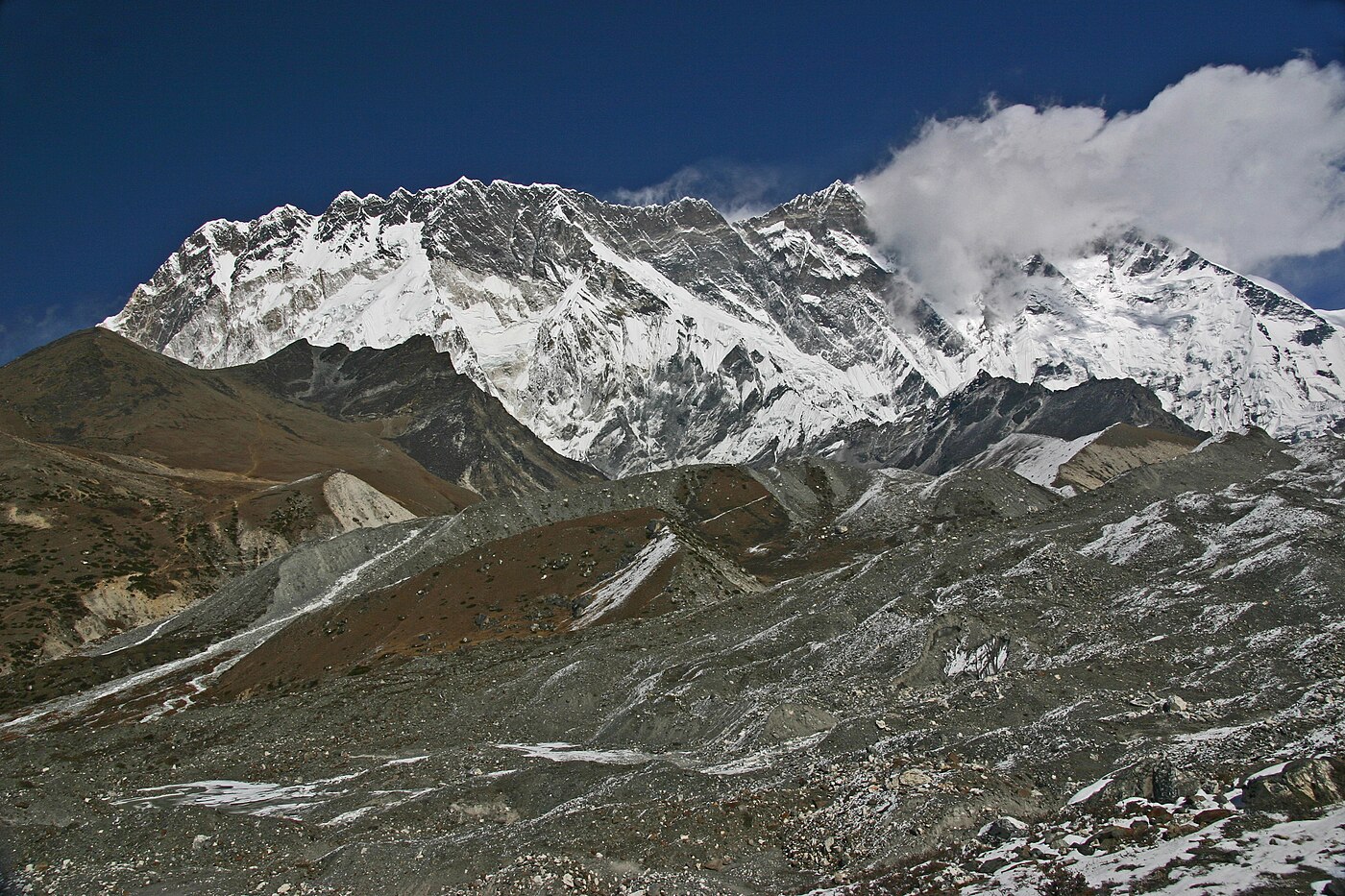
Island Peak, known locally as Imja Tse, is the mountain most people climb first in Nepal. At 6,189m it is a genuine Himalayan summit involving crampons, fixed ropes and a steep headwall, but it does not require years of alpine experience.
This itinerary includes Everest Base Camp first, which gives excellent acclimatisation before the climb and makes summit success far more likely.
Trip Highlights
- A 6,189m Himalayan summit with no prior expedition experience required
- Everest Base Camp and Kala Patthar included for acclimatisation
- A full training day on ropes, crampons and jumar technique
- The dramatic headwall and summit ridge above the Imja Glacier
- Certified NMA climbing guide and full group equipment
- Views of Lhotse, Nuptse, Makalu and Baruntse from the summit
Overview
Island Peak, known locally as Imja Tse, is the mountain most people climb first in Nepal. At 6,189m it is a genuine Himalayan summit involving crampons, fixed ropes and a steep headwall, but it does not require years of alpine experience.
This itinerary includes Everest Base Camp first, which gives excellent acclimatisation before the climb and makes summit success far more likely.
Trip Highlights
- A 6,189m Himalayan summit with no prior expedition experience required
- Everest Base Camp and Kala Patthar included for acclimatisation
- A full training day on ropes, crampons and jumar technique
- The dramatic headwall and summit ridge above the Imja Glacier
- Certified NMA climbing guide and full group equipment
- Views of Lhotse, Nuptse, Makalu and Baruntse from the summit
Trip Highlights
- A 6,189m Himalayan summit with no prior expedition experience required
- Everest Base Camp and Kala Patthar included for acclimatisation
- A full training day on ropes, crampons and jumar technique
- The dramatic headwall and summit ridge above the Imja Glacier
- Certified NMA climbing guide and full group equipment
- Views of Lhotse, Nuptse, Makalu and Baruntse from the summit
Itinerary of Island Peak Climbing – 17 Days
You are met at Tribhuvan International Airport and transferred to your hotel in Kathmandu, with the rest of the day free.
Island Peak - Imja Tse - is a trekking peak at 6,189 m. No previous mountaineering experience is required, but it is a genuine climb: the summit day involves a fixed-rope ascent of a steep headwall, a glacier crossing on a rope team, and the use of crampons, harness, jumar and ice axe. If you have not used that equipment before, you will be taught on the mountain.
The afternoon briefing covers the acclimatisation plan, the summit day in detail, and a full gear check. A climbing permit through the Nepal Mountaineering Association is arranged alongside the national park and municipality permits, so bring your passport, photographs and insurance documents.
Insurance must cover mountaineering to 6,500 m including helicopter evacuation - standard trekking cover is not sufficient and we will check the policy wording.
Technical equipment can be hired in Kathmandu or Chhukung; personal items such as boots should ideally be your own and already broken in. Overnight in a three-star hotel in Kathmandu.
A pre-dawn transfer for the flight to Lukla, thirty-five minutes threading between ridges to the short uphill runway at 2,860 m. In peak season the flight departs from Ramechhap, requiring a road transfer that leaves Kathmandu around one in the morning.
Porters and loads are organised at Lukla over tea, then you set out through the town gate onto the trail north.
The walking is easy and mostly downhill along the Dudh Koshi through Chheplung and Ghat, past mani walls and prayer wheels driven by the stream. It is a gentle introduction, and there is no advantage in doing more on your first day at altitude.
Around three hours over 8 km, descending 250 m. Your guide will use the afternoon to check your kit properly now that it is out of the bag.
Lunch and dinner at the lodge. Overnight in Phakding.
The trail follows the Dudh Koshi north, crossing the river on high suspension bridges, and registers at the Sagarmatha National Park entrance at Monjo before dropping to Jorsalle for lunch.
The Hillary Bridge above the confluence of the Dudh Koshi and Bhote Koshi marks the start of the day's real work: a 600 m climb through pine forest in a long series of switchbacks, two to three hours at a measured pace.
Roughly halfway up, weather allowing, Everest first appears as a dark wedge behind the Nuptse-Lhotse wall. Namche Bazaar then opens out below you at 3,440 m, built into a horseshoe bowl facing Kongde Ri.
Namche is the hub of the Khumbu, with gear shops that can supply almost anything you have forgotten, bakeries, ATMs and a Saturday market that has run for generations.
Six to seven hours over 11 km with 830 m of ascent. All meals provided. Overnight in Namche.
The first acclimatisation day, and on a climbing trip these matter even more than usual - your summit chances depend far more on how well you acclimatise than on how fit you are.
The morning walk climbs behind the town past Syangboche to the Everest View Hotel at 3,880 m, where Everest, Lhotse, Nuptse and Ama Dablam are laid out from the terrace, then loops down through Khumjung and Khunde before returning to Namche.
The afternoon is free. This is the last reliable place for cash, hot showers and charging, and a good moment to buy any remaining gear - Namche's shops carry hired crampons, harnesses and down suits, though hiring in Chhukung is also possible.
Your guide will go through your climbing kit list with you at some point today.
Four to five hours with 440 m gained and lost. All meals provided. Overnight in Namche.
The high contour path out of Namche is one of the great walks of the region, running nearly level along the valley wall with Everest, Lhotse, Nuptse, Thamserku and Ama Dablam ahead for most of the morning.
At Sanasa the Gokyo trail branches away and you descend steeply to Phunki Tenga on the Dudh Koshi, where water-driven prayer wheels turn in the stream and lunch is usually taken.
The afternoon is a 600 m climb through rhododendron and birch to the saddle at Tengboche, home to the largest monastery in the Khumbu. It is hard work at this stage but the arrival is worth it.
The monastery holds afternoon prayers most days, and visitors may sit quietly at the back. Ama Dablam from the monastery lawn at sunset is one of the images people take home.
Five to six hours over 10 km with 700 m of ascent. All meals provided. Overnight in Tengboche.
Be outside for sunrise if you can - the light moving across Everest, Lhotse, Nuptse and Ama Dablam from Tengboche is exceptional.
The trail descends to Deboche, crosses the Imja Khola on a bridge above a narrow gorge, and climbs to Pangboche, where the oldest gompa in the Khumbu stands in the upper village. Climbing expeditions traditionally stop here for a blessing before going higher, and you may do the same.
Above Pangboche the trees give out and the valley widens into the bare Imja basin. Ama Dablam towers to the right, and Island Peak becomes visible for the first time at the head of the valley - your first proper look at the objective.
Dingboche at 4,410 m is a spread of stone-walled fields and lodges, farmed at an altitude that seems barely possible.
Five to six hours over 12 km with 550 m of ascent. All meals provided. Overnight in Dingboche.
An acclimatisation day built around the climb up Nangkartshang Ridge behind the village, a steep non-technical ascent of around 600 m to a prayer-flag high point at roughly 5,080 m.
The view repays the effort: Makalu appears to the east, with Ama Dablam directly opposite, Lhotse and Island Peak up the Imja valley, and Cholatse and Taboche to the west. Seeing Island Peak from this angle, with the summit ridge and headwall visible, is a useful piece of preparation.
Back in Dingboche the afternoon is free. Hydration and eating properly matter more from here on than most people expect, and appetite tends to fall away exactly when calorie needs rise.
Be candid with your guide about how you are feeling. On a climbing itinerary there is a contingency day built in, and using it early to acclimatise properly is far better than losing the summit later.
Three to four hours with 600 m gained and lost. All meals provided. Overnight in Dingboche.
The route now follows the Base Camp trail north, both because it is the natural approach and because the extra height gained over the next three days is exactly what you need before the climb.
The trail climbs gently onto the ridge above Dingboche and contours into the Khumbu valley, joining the Pheriche route at Dughla. From there a steep hour brings you up the terminal moraine of the Khumbu Glacier to Thukla Pass at 4,830 m.
The top of the climb opens onto a field of stone memorials to climbers lost on Everest, among them Scott Fischer and Babu Chiri Sherpa. Most people slow down here; on a trip that involves climbing, it lands rather differently.
Beyond the memorials the trail runs along the glacier's lateral moraine, an increasingly stark world of rock and ice, to Lobuche at 4,940 m.
Five to six hours over 8 km with 530 m of ascent. All meals provided. Overnight in Lobuche.
A long day at altitude. The trail follows the rough moraine beside the Khumbu Glacier, crossing boulder fields and glacial streams on a path that shifts as the ice moves beneath it.
Three hours or so brings you to Gorak Shep at 5,164 m, on the sandy bed of a drained glacial lake, where you drop your pack and eat an early lunch.
The walk out to Everest Base Camp takes a further two to three hours over rock and moraine to 5,364 m, directly beneath the Khumbu Icefall with Nuptse and Pumori above. In the spring climbing season the camp is a tented town and you may see teams preparing to move through the icefall.
Everest is hidden behind Nuptse from Base Camp itself - the view of it comes tomorrow. You return to Gorak Shep for the night.
Seven to eight hours over 15 km. All meals provided. Overnight at Gorak Shep.
A pre-dawn climb to Kala Patthar at 5,545 m, two to three hours of steep walking on rock and scree, for the definitive view of Everest: the whole south-west face, flanked by Nuptse, Lhotse, Changtse and Pumori.
At 5,545 m this is also the highest you will sleep-adjacent point before the climb, and it is deliberately placed here - reaching this altitude and descending is exactly the preparation Island Peak requires.
After breakfast at Gorak Shep you begin the long descent, retracing the moraine to Lobuche, crossing back over Thukla Pass and dropping through Pheriche or Dughla into the Imja valley.
Returning to Dingboche at 4,410 m means sleeping over 750 m lower than last night, which does a great deal for recovery before the climbing phase begins.
Seven to eight hours with 600 m of ascent and around 1,350 m of descent. All meals provided. Overnight in Dingboche.
A short and easy day east up the Imja valley, which after the previous two days feels almost restful.
The trail follows the river on a gentle gradient through open, treeless country, with Ama Dablam falling behind and the enormous south face of Lhotse filling the head of the valley. Island Peak stands in front of it, and from here the route to the summit is clearly readable: the long moraine approach, the headwall, and the summit ridge.
Chhukung at 4,730 m is a small group of lodges at the end of the valley, existing largely to serve climbers. Any technical gear you still need can be hired here, and your guide will check fit and function properly.
Arriving early leaves the afternoon free, and a short walk up towards Chhukung Ri is good acclimatisation.
Three to four hours over 6 km with 320 m of ascent. All meals provided. Overnight in Chhukung.
A full training day at Chhukung, and the most important preparation of the trip for anyone who has not climbed before.
On suitable ground near the village your climbing guide takes you through the whole technical repertoire: fitting and walking in crampons, self-arrest with an ice axe, ascending a fixed rope with a jumar, abseiling and descending on a figure-of-eight, tying into a rope team, and moving safely on a glacier.
The session is practical and hands-on, and it is repeated until the movements are automatic - on summit night, in the dark and cold at 6,000 m, is not the moment to be working out how a jumar releases.
Experienced climbers can treat the day as an acclimatisation walk instead, typically the climb to Chhukung Ri at around 5,550 m, which is excellent preparation.
Four to six hours depending on the option. All meals provided. Overnight in Chhukung.
A short but significant day, moving up to base camp. The trail leaves Chhukung and climbs south-east across open moraine and grassy shelves, following the Imja Khola towards the glacier.
The walking is straightforward but the altitude is felt on every rise. As you gain height the Imja Tsho glacial lake comes into view, a large meltwater lake beneath the Lhotse and Imja glaciers that has grown substantially in recent decades.
Island Peak Base Camp at 5,087 m sits on a sandy flat beneath the south-west face, ringed by Lhotse, Nuptse, Baruntse and Ama Dablam. Depending on the season you will be in tents or in the seasonal lodge.
The afternoon is spent resting, checking equipment one final time and eating early. Your guide will brief the summit plan in detail and set the departure time. Sleep, if it comes at all, will be brief.
Two to three hours with around 360 m of ascent. All meals provided. Overnight at Island Peak Base Camp.
Summit day. You wake around one in the morning, eat what you can, and set off by head torch up a steep rocky gully above camp - a couple of hours of scrambling on loose ground that is the least pleasant part of the climb.
The gully leads onto a broad rock ridge which you follow, occasionally exposed, to the glacier's edge at around 5,800 m. Here you put on crampons and harness and rope up as a team.
The glacier crossing takes one to two hours, weaving between crevasses, with an aluminium ladder sometimes in place over the largest of them. It brings you to the foot of the headwall - a steep snow and ice slope of roughly 100 to 150 m, at up to 45 degrees, climbed on fixed rope with a jumar. This is the crux, and it is hard work at 6,000 m.
The top of the headwall gives onto a narrow, corniced summit ridge, and a final airy few minutes leads to the summit at 6,189 m. Lhotse, Lhotse Middle and Shar fill the sky immediately north, with Makalu, Baruntse, Ama Dablam and Nuptse around you. You descend the same way, abseiling the headwall, and continue to Chhukung.
Ten to fourteen hours in total. All meals provided. Overnight in Chhukung.
A contingency day, held in reserve and not part of the plan unless it is needed.
Weather is the usual reason to use it. High wind or fresh snow can make the headwall unjustifiable, and having a spare day means a postponed attempt rather than an abandoned one. It also covers a slower acclimatisation, illness in the group, or simply a summit day that ran long.
If the summit was reached yesterday the day is spent resting at Chhukung, or descending early towards Dingboche and Pangboche to gain a comfortable night at lower altitude.
Building this day in is what makes the difference between a good chance on the mountain and a single roll of the dice - and if it is not needed, an extra day in the Khumbu is no hardship.
All meals provided. Overnight in Chhukung or Dingboche.
A long descent back down the valley. The trail drops from Chhukung through Dingboche and Pangboche, recrossing the Imja Khola and climbing briefly to Tengboche before the forest descent to Phunki Tenga.
From there the high contour path traverses back into Namche, with the Kongde wall opposite and the air thickening steadily. Most people find they can suddenly walk at a normal pace again, which after a fortnight at altitude is a strange sensation.
Depending on pace and how the contingency day was used, the day either ends in Namche or continues down to Lukla; your guide will set the plan on the ground. Either way this is a long day on tired legs.
The trek finishes at Lukla, where the evening is spent with the guides, climbing guide and porters over a final dinner - the customary point for tips.
Eight to ten hours. All meals provided. Overnight in Lukla.
An early transfer to Lukla airport for the thirty-five minute flight to Kathmandu, or to Ramechhap with an onward road transfer depending on the season.
Lukla flights are weather-dependent and delays are routine. On a climbing itinerary we recommend at least one buffer day in Kathmandu before an international flight; helicopter transfers can usually be arranged at additional cost if conditions stay closed.
You are met on arrival and transferred to your hotel, where the trip ends. The rest of the day is free.
Summit certificates issued through the Nepal Mountaineering Association are usually presented at a farewell dinner in the evening, along with music and dance at a Nepali restaurant in the city.
Breakfast and dinner provided. Overnight in Kathmandu. Airport transfers for your departure are included.
Cost Includes/Excludes
Cost Includes
- Airport transfers and hotel nights in Kathmandu with breakfast
- Kathmandu to Lukla return flights including airport taxes
- Teahouse accommodation on trek and tented camp at Island Peak Base Camp
- All meals during the trek and climb
- NMA-certified climbing guide plus trekking guide
- Island Peak climbing permit and Sagarmatha National Park permits
- Group climbing equipment: rope, ice screws, snow bar and fixed lines
- One porter shared between two climbers (up to 20kg)
- Guide and porter wages, insurance, meals and accommodation
- Emergency oxygen, first aid kit and pulse oximeter
- All applicable government taxes
Cost Excludes
- International flights and Nepal visa fees
- Personal climbing equipment: boots, harness, crampons, ice axe, jumar
- Travel and medical insurance covering mountaineering above 6,000m including helicopter evacuation
- Lunch and dinner in Kathmandu
- Drinks, hot showers, Wi-Fi and charging on the trail
- Extra nights caused by weather or flight delays
- Summit bonus and tips for guide and porter
FAQs
No, but you must be a strong trekker and comfortable with heights and exposure. The training day at Chhukung covers crampons, fixed ropes and abseiling. Prior time above 5,000m is a significant advantage.
Yes. Harness, crampons, ice axe, jumar and helmet can all be hired in Kathmandu or Chhukung at reasonable cost. We recommend bringing your own well-fitted mountaineering boots.
A policy that explicitly covers mountaineering to 6,500m including helicopter evacuation. Standard travel insurance almost always excludes climbing above 6,000m, so check the wording carefully.
Typically 70 to 85 percent for well-acclimatised climbers in settled weather. The most common reasons for turning back are weather, altitude and underestimating the length of summit day.